
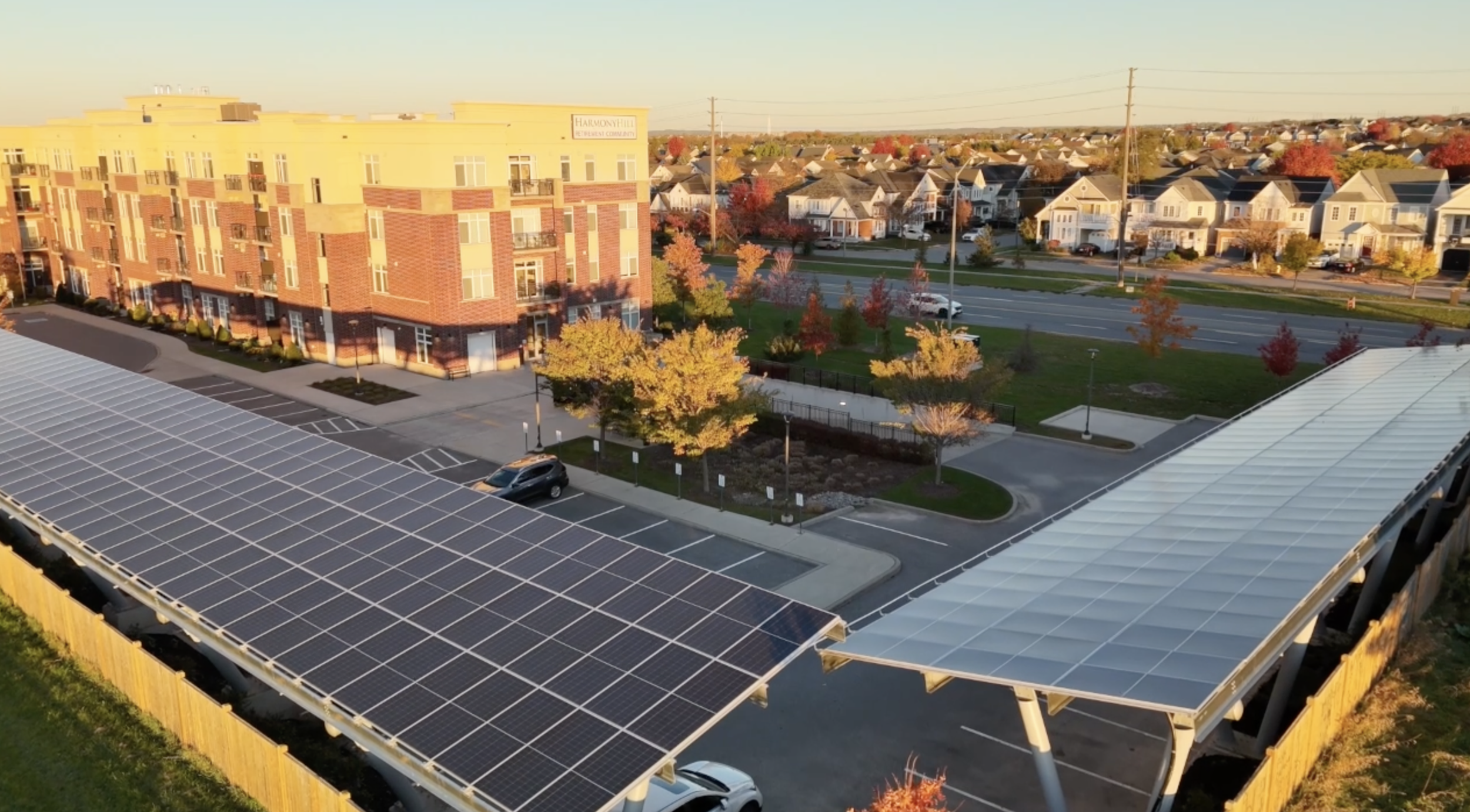
Turn Your Parking Lot Into a Power Plant
SOLERA CARPORT
Harmony Hills Retirement Community
Oshawa, ON
Solera’s Carport turns under-utilized parking lots into productive clean-energy assets. By elevating solar arrays over existing stalls, you generate on-site renewable power without sacrificing valuable land or operational footprint.
Cut operating overhead
Offset facility energy bills and protect against volatile utility rate hikes.
Elevate visitor experience
Offer shaded parking that shields vehicles from sun, rain, and snow—plus integrated EV charging options.
Demonstrate leadership
Turn sustainability into a visible, physical statement for customers, employees, and stakeholders.
Frequently Asked Questions
-
No. We phase installation section-by-section to keep drive aisles clear and the vast majority of parking stalls accessible throughout the build.
-
Every system is custom-engineered with heavy-gauge commercial steel to meet or exceed local building codes for geographic wind and snow loads. Integrated drainage management channels melted runoff safely away from parking bays and walkways.
-
Yes. Canopy foundations use high-impact concrete piers, reinforced base bollards, and high-clearance cantilevers designed specifically to protect both structural columns and parked vehicles.
-
Aside from a brief, scheduled electrical tie-in—typically performed during planned off-hours or over a weekend—your facility maintains normal business operations from start to finish.
A carport system is easier than you might think.
Going solar doesn't mean taking on a second job. Solera manages the entire lifecycle from preliminary layout to utility interconnection, keeping disruption to your daily operations minimal.
Feasibility & Design (Weeks 1–4):
We assess your lot, analyze electrical loads, and model production alongside custom financing options (including zero-down PPAs and federal tax credits).
Permitting & Procurement (Weeks 5–12):
Our team handles zoning, structural engineering approvals, and utility interconnection filings.
Construction & Commissioning (Weeks 13–18):
Work is phased across lot sections to maintain traffic flow and parking availability, wrapping with safety testing and grid activation.